
Mindfulness
This interview is about the spirit of the Donate-a-Meal Movement.
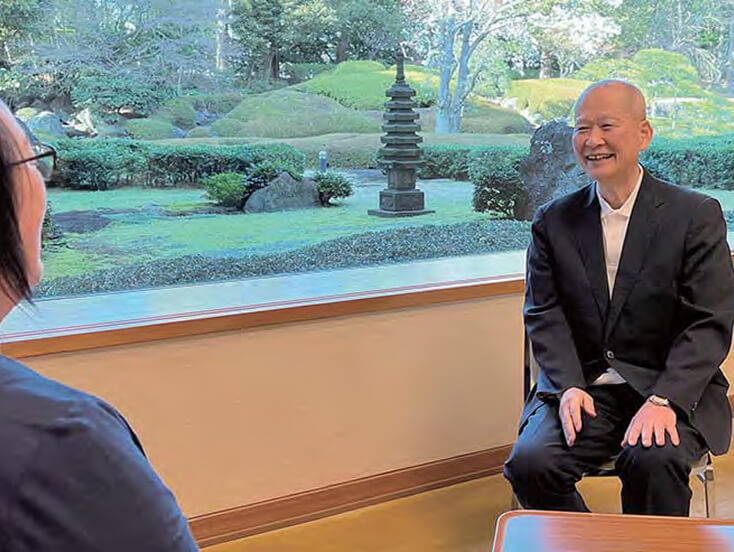
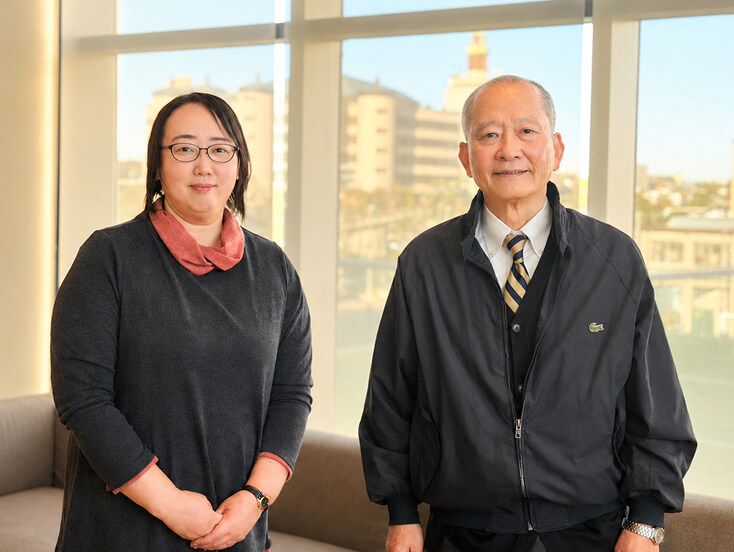
Ms. Kumiko Hideshima, General Secretary of the Donate-a-Meal Fund for Peace, speaks with Rev. Shoko Mizutani, Minister of the International Buddhist Congregation (IBC) of Rissho Kosei-kai, who is a long-time advocate of the movement.
Ms. Kumiko Hideshima, General Secretary of the Donate-a-Meal Fund for Peace, speaks with Rev. Shoko Mizutani, Minister of the International Buddhist Congregation (IBC) of Rissho Kosei-kai, who is a long-time advocate of the movement.
Click the Video button below to experience the initiative he currently leads, Mindfulness Meditation Through Donating a Meal, held on the first and fifteenth day of each month at the Great Sacred Hall, where participants gently embrace the sensation of hunger experienced when skipping a meal and use it as an opportunity to reflect on their own lives.
Interview
Video
Interview
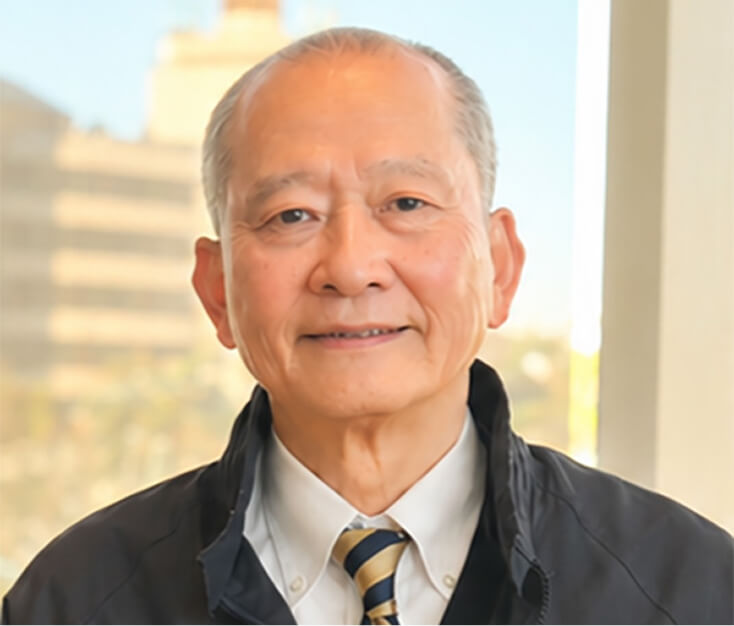
About Rev. Shoko Mizutani
Rev. Mizutani majored in agricultural studies at university. Driven by a desire to contribute to the international community through agriculture, he pursued further studies in biology in the United Kingdom. While studying abroad, he became aware of an inner conflict—his mind was far from peaceful, even though he aspired to help build a peaceful world. During this time, he came across the idea that “the true self is one with the universe” in the Founder’s writings. This insight led him to realize that inner peace could be attained through the teachings of Rissho Kosei-kai. He joined the organization in 1978.
Convinced that sharing Buddhism was the path to world peace, he became a staff member of Rissho Kosei-kai in 1980. Since then, he has served as a minister at overseas Dharma centers and as director of Rissho Kosei-kai International. He has held his current position since December 2023.
Convinced that sharing Buddhism was the path to world peace, he became a staff member of Rissho Kosei-kai in 1980. Since then, he has served as a minister at overseas Dharma centers and as director of Rissho Kosei-kai International. He has held his current position since December 2023.
Ms. Hideshima:
Thank you for taking the time to speak with us today. Thanks to everyone’s support, this year marks the fiftieth anniversary since Rissho Kosei-kai launched the Donate-a-Meal Movement. From the beginning, this initiative has embraced these three principles: Empathy, Prayer, and Donation. Today, under the theme of “A Movement That Rejoices the Heart Through Donating a Meal,” we also highlight the sense of joy that comes from acting thoughtfully toward others. Through this practice, we cherish the feeling of kindness and compassion growing within ourselves. You have been involved with the Donate-a-Meal Movement for a long time. How did you first encounter it?
Rev. Mizutani:
I don’t remember exactly when I first learned about this movement, but in 1979, our Founder made an appeal in the Asahi Shimbun newspaper’s rondan, “opinion forum,” titled “Toward a National Movement for the Donate-a-Meal Movement,” calling on the broader public to participate. At the time, the movement was being actively promoted, so I had certainly heard about it. After graduating from Gakurin Seminary, I went to study in the United States. Upon returning to Japan, I was assigned to the International Affairs Department, where I was sent to support medical relief activities in Africa. I think it was around this time, when I was placed in the very department responsible for managing this movement’s donation-based aid projects, that I became fully aware of the movement’s significance.
Ms. Hideshima:
What were your thoughts and feelings as you practiced the movement back then?
Rev. Mizutani:
I saw this movement not just as a humanitarian aid initiative, but as a profound spiritual movement aimed at creating a world where people can live together beyond national borders. Personally, I skipped a meal on days designated to practicing donating a meal, but I often found myself preoccupied with feelings of hunger and dissatisfaction, which made it difficult to truly experience the joy of the practice.
At the time, I had many opportunities to visit overseas organizations that were recipients of the Donate-a-Meal Fund for Peace. When I explained to them that “We, members of Rissho Kosei-kai, skip meals, pray for your peace, and donate the money we would have spent on food, wishing for your peace,” the people we supported were deeply moved and embraced the true significance of the movement. Time and again, I witnessed such genuine and heartfelt responses. And each time, I reflected on our attitude and how we may not have been practicing the spirit of this movement, for which they seemed so moved and deeply grateful, as sincerely as we could.
At the time, I had many opportunities to visit overseas organizations that were recipients of the Donate-a-Meal Fund for Peace. When I explained to them that “We, members of Rissho Kosei-kai, skip meals, pray for your peace, and donate the money we would have spent on food, wishing for your peace,” the people we supported were deeply moved and embraced the true significance of the movement. Time and again, I witnessed such genuine and heartfelt responses. And each time, I reflected on our attitude and how we may not have been practicing the spirit of this movement, for which they seemed so moved and deeply grateful, as sincerely as we could.
Ms. Hideshima:
While a sense of mission and responsibility for doing what needs to be done are very important, I feel that if that is the only thing you focus on, the Donate-a-Meal Movement can feel like a painful and difficult thing to do. And you can easily lose sight of the original significance of the movement, such as the development of a compassionate and prayerful heart through practice.
Rev. Mizutani:
If we think only about doing it “for someone else” or “for the realization of an ideal society,” we may sometimes feel burdened or find it difficult to continue. That is why I believe it is essential to experience joy and personal growth through practice.When these elements are present, the spirit of this movement can be felt more deeply, making it something we can sustain over the long term.
Ms. Hideshima:
I believe that the Mindfulness Meditation Through Donating a Meal initiative that you are working on contains important hints for experiencing joy through the practice of the Donate-a-Meal Movement.Could you share the background of how this initiative came about?
Rev. Mizutani:
In the 1990s, I had the opportunity to meet Ven. Phra Yuki Naradevo, a Japanese monk in the Thai Theravada Buddhist tradition. After graduating from Sophia University, he went to Thailand to study rural development and the role of monks. Later, he was ordained under Ven. Luang Por Kamkean, a renowned meditation teacher. Currently, he serves as the deputy abbot of a temple in Thailand and is also active in conveying Theravada Buddhism to Japan. Through Ven. Naradevo, I was introduced to Vipassana meditation, which serves as the foundation for mindfulness meditation. In this practice, even when distractions arise during meditation, we simply recognize them and with each instance, gently return our awareness to the present moment, the “here and now.” This practice trains us to objectively observe unpleasant emotions and past experiences that arise in our minds and stick to us. This prevents us from amplifying our own suffering. I continued to practice this meditation even while I was serving as a minister in the United States.
After returning to Japan, I experienced a profound change in the way I perceived hunger while practicing both donating a meal and meditation. One day, I encountered what I now call Little Hunger. Until then, I had always thought of hunger as something unpleasant— just an uncomfortable feeling that required endurance. But at that moment, I realized that hunger is actually an important signal for survival. For example, sometimes, people carelessly forget to take their daily medication for three days in a row, don’t they? But hunger serves as a natural reminder: “You’re hungry! You should eat!” If we didn’t feel hunger, we might simply forget to eat. When I thought about it this way, I started seeing hunger as a precious companion that was trying to keep me alive. The moment I embraced this perspective, the hunger that I once resented became something I found endearing. I even felt like calling it Little Hunger with a sense of affection and familiarity.
After returning to Japan, I experienced a profound change in the way I perceived hunger while practicing both donating a meal and meditation. One day, I encountered what I now call Little Hunger. Until then, I had always thought of hunger as something unpleasant— just an uncomfortable feeling that required endurance. But at that moment, I realized that hunger is actually an important signal for survival. For example, sometimes, people carelessly forget to take their daily medication for three days in a row, don’t they? But hunger serves as a natural reminder: “You’re hungry! You should eat!” If we didn’t feel hunger, we might simply forget to eat. When I thought about it this way, I started seeing hunger as a precious companion that was trying to keep me alive. The moment I embraced this perspective, the hunger that I once resented became something I found endearing. I even felt like calling it Little Hunger with a sense of affection and familiarity.
Ms. Hideshima:
Did this change in the way you perceive hunger lead to the Mindfulness Meditation Through Donating a Meal initiative?
Rev. Mizutani:
Through meditation, the hunger I had previously found unpleasant began to feel like a dear companion, Little Hunger. Strangely, I felt a sense of calm. I started to think that by connecting the feelings of insufficiency and hunger that come with fasting to mindfulness meditation, we might be able to overcome the negative image of self-restraint, which is often the biggest challenge in skipping or sparing a meal. With this idea in mind, I worked with Ms. Masayo Urasaki to shape what later became the Mindfulness Meditation Through Donating a Meal initiative. Ms. Urasaki has worked as a lecturer at Mahidol University in Thailand and still resides there, translating sermons of Thai monks and books on Theravada Buddhism to transmit their teachings to Japan. She is also a member of Rissho Kosei-kai.
Ms. Hideshima:
That is a very interesting story. It seems like there is a profound transformation in the process of not just accepting hunger but coming to see it as something dear. Could you describe more specifically what this sense of “dearness” felt like?
Rev. Mizutani:
At first, I thought that if I could transcend the discomfort of hunger through meditation, I would be able to find more joy in practicing the Donate-a-Meal Movement. However, as I continued to observe my hunger closely, I realized that beneath the sensation of “I’m hungry,” there was a force working to keep me alive. And this life-sustaining force is not unique to me, but it exists equally in everyone. In our teachings, this is what we refer to as one immense Life, which connects to the life of the Buddha. Thinking about it in this way, the feeling of “dearness” may be similar to a feeling of thankfulness or gratitude toward something that is striving to sustain me. Our hearts and organs continue to function tirelessly without our conscious effort, keeping us alive. When I became aware of this, I found myself thinking “This is amazing, thank you.” And when I expressed gratitude to these parts of myself, I felt a shift in my relationship with them. It was as if acknowledging them changed the way I perceived them.
Ms. Hideshima:
What kinds of changes have you experienced by incorporating mindfulness meditation into your donating-a-meal practice?
Rev. Mizutani:
In the past, the days of practicing donating a meal were for me days of enduring hunger. But now, I actually look forward to them. I still feel hunger, but I no longer suffer from it. Also, on donating-a-meal days, I can definitely take the time for meditation, even if only briefly. Through meditation, I shift from being a person who is swayed by emotions to a person who observes them. This transformation has been helpful in my daily life as well. I have become more aware of the negative emotions and thoughts that arise in difficult situations or interactions with others. As a result, feelings of frustration and dissatisfaction fade away. I feel that I am developing the ability to calmly observe myself without being controlled by attachments or desires.
Ms. Hideshima:
I have learned that the state of hunger and the desire to eat something are not necessarily one and the same thing. Through meditation, we can think about them separately, and as a result, I felt we can examine each more deeply.
Rev. Mizutani:
As we continue meditating, we gradually become able to observe our feelings and emotions more deeply.
Ms. Hideshima:
Thank you. Finally, could you give a message to those who are practicing with the Donate-a-Meal Movement?
Rev. Mizutani:
The Donate-a-Meal Movement is not just a fundraising initiative but a spiritual practice that nurtures the heart. Through this practice, our hearts become gentler, kindness spreads to those around us, and ultimately, it contributes to creating a more compassionate world. The expansion of this movement has the power to change the world. The key is to fully experience the depth of the Donate-a-Meal practice. When we do, awareness and joy naturally arise. I believe that this awareness and joy can have a positive impact on others, creating a cycle of goodness. If Mindfulness Meditation Through Donating a Meal can support this process in any way, I will be truly delighted.